THE extraordinary rainstorms last June caused catastrophic soil erosion in the grain lands of Iowa, where there were gullies 200 feet wide. But even worse damage is done over the long term under normal rainfall — by the little rills and sheets of erosion on incompletely covered or denuded cropland, and by various degradations resulting from industrial procedures and technologies alien to both agriculture and nature.
Soil that is used and abused in this way is as nonrenewable as (and far more valuable than) oil. Unlike oil, it has no technological substitute — and no powerful friends in the halls of government. Agriculture has too often involved an insupportable abuse and waste of soil, ever since the first farmers took away the soil-saving cover and roots of perennial plants. Civilizations have destroyed themselves by destroying their farmland. This irremediable loss, never enough noticed, has been made worse by the huge monocultures and continuous soil-exposure of the agriculture we now practice.
To the problem of soil loss, the industrialization of agriculture has added pollution by toxic chemicals, now universally present in our farmlands and streams. Some of this toxicity is associated with the widely acclaimed method of minimum tillage. We should not poison our soils to save them.
Industrial agricultural has made our food supply entirely dependent on fossil fuels and, by substituting technological “solutions” for human work and care, has virtually destroyed the cultures of husbandry (imperfect as they may have been) once indigenous to family farms and farming neighborhoods.
Clearly, our present ways of agriculture are not sustainable, and so our food supply is not sustainable. We must restore ecological health to our agricultural landscapes, as well as economic and cultural stability to our rural communities.
For 50 or 60 years, we have let ourselves believe that as long as we have money we will have food. That is a mistake. If we continue our offenses against the land and the labor by which we are fed, the food supply will decline, and we will have a problem far more complex than the failure of our paper economy. The government will bring forth no food by providing hundreds of billons of dollars to the agribusiness corporations.
Any restorations will require, above all else, a substantial increase in the acreages of perennial plants. The most immediately practicable way of doing this is to go back to crop rotations that include hay, pasture and grazing animals.
But a more radical response is necessary if we are to keep eating and preserve our land at the same time. In fact, research in Canada, Australia, China and the United States over the last 30 years suggests that perennialization of the major grain crops like wheat, rice, sorghum and sunflowers can be developed in the foreseeable future. By increasing the use of mixtures of grain-bearing perennials, we can better protect the soil and substantially reduce greenhouse gases, fossil-fuel use and toxic pollution.
Carbon sequestration would increase, and the husbandry of water and soil nutrients would become much more efficient. And with an increase in the use of perennial plants and grazing animals would come more employment opportunities in agriculture — provided, of course, that farmers would be paid justly for their work and their goods.
Thoughtful farmers and consumers everywhere are already making many necessary changes in the production and marketing of food. But we also need a national agricultural policy that is based upon ecological principles. We need a 50-year farm bill that addresses forthrightly the problems of soil loss and degradation, toxic pollution, fossil-fuel dependency and the destruction of rural communities.
This is a political issue, certainly, but it far transcends the farm politics we are used to. It is an issue as close to every one of us as our own stomachs. Wes Jackson is a plant geneticist and president of The Land Institute in Salina, Kansas. NYTimes
Friday, April 30, 2010

Fred Kirschenmann, winner of NRDC’s Growing Green “Thought Leader” award
 Fred Kirschenmann is a long-time organic farmer with a doctorate in philosophy from the University of Chicago. He holds positions at Iowa State University's Leopold Center for Sustainable Agriculture University and at the New York-based Stone Barns Center for Food and Agriculture. Fred proudly embodies the title of "agri-intellectual."
Industrial agriculturalists may sneer at Fred, but no one who has listened to one of his hundreds of talks over the past several years can walk away without understanding that the current system is hopelessly reliant on cheap and abundant fossil fuel energy. Perhaps more importantly, Fred is expert at identifying the ecological niches and synergies that create smarter, less wasteful, yet quite-abundant systems.
Q. What ideas floating around the agriculture world are you most excited about?
A. For one, the Land Institute and their research in perennializing grain crops is terribly important because we've got to do a better job of maintaining the biological health of our soil and perennials would do a much better job of that. The Land Institute, in doing its research over the last thirty years, has developed some varieties now that are looking good. In fact, they're making some flour from perennial wheat varieties that they've developed.
The Land Institute has proposed a fifty-year farm bill to the USDA, to really move this forward, which I think is a very creative idea. I don't know whether they [the USDA] will pick up on it or not. But that's one idea that's out there that I think is going to become so important, particularly as energy costs go up, etc.
Another exciting idea is what individual farmers are doing all around the world now: converting from high input/output systems of agriculture, the basic industrial model, to models that are based on what I call biological synergies, that is where they have a diversity of plants and animals in which the waste from one species becomes the food for another. And they're producing much more food because it's not a monoculture, so there are more food products coming off per acre, and doing it at vastly reduced energy costs.
Q. Given all the trends in ag happening now--the emerging ecological models you're talking about, the continuing dominance of industrial food--where do you see U.S. agriculture in twenty years?
A. Well, there are two major movements. There's this movement in a new direction: recognizing that we need to now shift from an industrial agricultural model to an ecological agricultural model. And that's gaining some traction, [though] it's still a small part of our agricultural system. And then on the other side there's the effort to buck up the industrial model with new technology. And of course the ecological model is now becoming just popular enough that it's starting to serve as a threat to the old model.
There are farmers and processors and other people in the food who have made huge investments in the industrial model. So they're going to understandably--and we should expect--that they will continue to try to defend that model as long as they possibly can. And I think we should be appreciative of that and reach out and try to work with them.
But in the long run, given the fact that our industrial model is so dependent on cheap energy, when you look ahead 10, twenty years, it's just not going to be viable, in any way I can see. So I think that in twenty years, what we're going to see is an agriculture that is much more diverse, because you're going to need those biological synergies as a way of making those systems work. I think the farms are going to be somewhat smaller because when you operate farms on an ecological basis, you need more intimate knowledge about your local ecology if you're going to manage it well. And I think that a food system is going to be more regionalized. I have to say I'm not a big advocate on the local food concept because it sort of limits you to a radius of, say, like 150 miles.
When you think about it as a total food system, because NYC has some 30 million people. You're going to feed them all from 150 miles around NYC? Probably not. North Dakota only has 630,000 people in the whole state. If they all ate from 150 miles, 90 percent of the farmland would probably lay idle. So, we have to think about this. I think we'll evolve to a regional concept in which people become more engaged in their own food systems in their own regions--systems that are appropriate to their own place.
Q. What can citizens do to help bring about this transition to a more ecological farming style?
A. I'm glad you use the word citizen. I like to use the phrase "food citizen" because right now, we've all come out of this 200 year culture of industrialization and so we tend to think of ourselves in special categories: so we're either farmers and producers, or we're consumers. But increasingly now, as people want to know where their food comes from, they're becoming more engaged and involved.
So we're starting to see now farmers and consumers sitting down together as food citizens and thinking about what's the food system that works for them. And CSAs and farmers markets are the beginnings, the starting point, of that kind of model.
I think that what ordinary food citizens in their own communities can do is a couple of things: one, when they go to buy food in their supermarket, and they're not sure about where the food comes from or whether it is what they want, they should ask to talk to the manager of that food section and ask the questions that they have. One of the things that people don't often realize [is] that in the food business, the ordinary customer has a lot of power because people who are in the food business understand perfectly well, that when they lose a customer, they can't replace the loss of that customer by getting their existing customers to eat more.
Studies have been done which indicate when 15 people go into the same supermarket, in the same week and ask for the same product, they will almost invariably get that product on the shelf. So they can do that, and they can also begin to think about producing some of their own food, turning part of their lawns into a garden, like Michelle Obama did. Whatever it takes-become more acquainted, take more charge, more control. Almost everyone could do that. BY Tom Philpott
Interview with ‘Growing Green’ water steward Mike Benziger
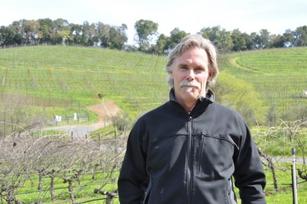 Mike Benziger on the family farm.When Mike Benziger and his family began growing grapes and making wine in 1970s-era Sonoma County, the prevailing agricultural style could be described as "scorched earth." Agrichemical concoctions fed the vines, killed the pests, and flattened the weeds; plentiful well water provided easy irrigation.
But such practices not only kill soil, they also deaden wine. Over time, the Benzigers began to rethink modern viticulture. One motivation was improving the product, making it stand out from the gusher of wine coming out of Sonoma. Another was the sinking water table on Sonoma Mountain, where the family keeps its vineyards. Faced with surging water costs, the family began searching for new farming methods that didn't treat water as a cheap and easy resource. Thus started an odyssey that inspired the family to convert its Sonoma property to biodynamic growing practices in the mid-1990s -- and that won Mike Benziger recognition from the NRDC as a "water steward." I caught up with Mike last week via phone.
Q. Tell us about how Benziger saves water.
A. It all started because we were running out of water -- our wells were dropping. Necessity really was the mother of invention. We're located on Sonoma Mountain, and water recharge was not happening anywhere near as fast as we were using the water. The bottom line in California is there's probably not going to be enough water to go around.
So, what are we going to do to address that? You throw climate change into that mix, and the problem gets that much more critical. There's a saying in the wine business: wine is for loving, but water is for fighting. But it turns out that when you use significantly less water in the field, you can actually raise the quality of wine. There's not a tradeoff between water use and wine quality. Of course, there are economic benefits, too -- one of the biggest costs we incur at our facility is for pumping water out of the ground.
So we looked to the vineyard first. Far and away, our growing practices used the most significant quantities of water. So, by designing vineyards that needed less water, by not planting in areas that had an excess demand for water, and by planting plants that were smaller, by planting plants that were less thirsty, by planting plants that had rootstalks that went deeper and pulled water from lower soil depth, we saved a lot of water.
And we quickly found that by irrigating less and using less inputs, our grapes, olives, and other products were more concentrated in flavor, higher in quality, and had a longer shelf life to it.
Q. Benziger is well-known in the industry for being certified biodynamic. Talk about the relationship between biodynamic growing practices and water conservation.
A. When we first moved into our property in 1980, we hired the best advisors. And they told us, "Hey, you better get rid of all of the natural things in your vineyards and push them out to the other side of the fence. We don't want any competition in your vineyards. Let's get rid of all the insects, let's get rid of all the weeds, let's get rid of all the birds. We need to have this under control. Only vines should be in a vineyard area."
Over time, we did a pretty good job of killing everything. One day, we went outside and we didn't hear a peep: we didn't see an insect, we didn't hear a bird, our soils were eroding because they were dead, and quite frankly, our wines were hit and miss. And that's when we knew we needed to look for some farming practices that maybe treated the land with a little bit more respect.
In about 1994-95, we started to look around for different farming practices. Biodynamic farming resonated with us because it did two things: it regenerated the land, meaning it built biological capital, and it individualized our product. And that was the thing that really, really attracted us. By farming this way, and by looking at biodynamics as a closed system of agriculture, we were able to individualize -- make our property more distinctive over time.
Biodynamics means recycling all the products within your property, and reducing the use of imported inputs ... including water. Over time, our philosophy came to never ever feed the vine, but to only take care of the soil. When you feed the vine, when the food for the vine is put on the surface of the soil and then dripped in with an irrigation system, the roots stay right where the food is, which is right in the first eighteen inches. If we take care of the soil, the roots go deeper to find the nutrients the plant needs -- the nutrients aren't all there at the surface. The goal is to get the roots to explore the entire soil profile and to eventually get down to where more permanent sources of water are, which in our case, tend to be down below six to eight feet. Once we can tap into that, then we can really delay our irrigations and save hundreds of thousands of gallons of water.
When the roots reach the lower depths, we can really tap into what I call the Holy Grail: and that is in being able to showcase what is called in the wine business the terroir of the property ... the sense of place, the sense that the wine came from somewhere specific.
Q. Animals are integral to biodynamic farming. What kind of animals are on your farm?
A. In biodynamic farming, you try to eliminate the use of inputs by enabling natural systems, through use of plants and animals. We use plants as habitat areas to bring in good insects that eat the bad bugs, which eliminate the need for pesticides, and we bring in the caretakers of soil biology and that eliminates the need for fertilizer.
So we have cows, which provide the manures for our compost, and sheep, which are out in the vineyards every day during the fall, winter, and the early part of spring. With every step, sheep do three things: they eat, they shit, and they till. They're pretty cool animals and they really invigorate the soil biology by keeping the grasses down low, that way we don't have to bring our machinery in early when compaction is a problem. They also provide the ability to turn their manures into grasses under, so that they break down and they keep the soil biology humming. They also put little dents, not too many, but little dents in the soil that act to hold water and help to recharge the soil aquifer faster. The other thing they do, which is really important, is they take care of disease protection by turning under with their paws all the litter that's left over from last year that usually has mildew and other bacteria in it; they turn it under and the soil bacteria take care of it right away.
Virtually all farms had animals for 10,000 years. They've been pushed off most farms over the last hundred years because we decided that monocrops are more efficient. But we really didn't look hard enough to see the real reasons why our ancestors were using animals
Q. What else are you doing to reduce water use in the winemaking process?
A. We've constructed wetlands that recycle 2-3 million gallons of water a year. All of the winery waste water and some of the grey water on our facility is captured in a pond and then, by gravity, it's recycled through this large wetlands that acts as a kidney that cleans the water to an incredibly high level -- to where it looks good enough to drink. That's the water that we then use for landscaping, and we then use for irrigation. It's used twice.
In the actual winemaking process, we recently invested in what's called "all-vibration technology." We've eliminated all belts and all screws. And that right there, eliminated, I think, 18-20 percent of the water use for harvest last year alone, just converting out of belts and screws to these very easy-to-clean, very efficient vibration tables. They clean up almost by themselves.
Then there's cleaning wine barrels. You can imagine how hard it is to clean a 60-gallon barrel and get it all clean on the inside when there's only a little hole to work through. In the past, we used up to 25 gallons per barrel. But with the new technologies that we've invested in, which is based on steam, we've been able to get that to below 5 gallons per barrel.
Q. Benziger is obviously known most for its wine -- what else is grown on your Sonoma Mountain land?
A. Yeah, we grow about 30 different types of vegetables and we make olive oil and we make honey. We have about 100 lamb. We sell all of our olive oil in the tasting room, then we supply local restaurants with vegetables and beef. We're also trying to make on a regular basis what I call an estate meal, which is a meal made entirely off the property of the lamb or the beef or the chicken with all the vegetables that we grow, with the olive oil and the honey, tasted alongside the wines that are made right there in that system, and to see if there's an overlap or a crossover in the flavors or the profiles or the textures of the wine or the olives oil or even the veggies.
Q. Sounds like an old-school diversified Mediterranean farm -- olive groves, vineyards, vegetables, meat, all growing right on top of each other.
A. Our property is 85 acres and less than 40 of it are in grapes. Then the other 35 or 40 are the biological support system for the grapes. The grapes are the lead character in the play. A lot of the time, [all the supporting actors] makes the lead character interesting. I don't want to give the impression we think we're perfect in terms of sustainability -- we can always do better! But it turns out that by doing things like conserving water and improving soil health, we make better wine. So we're committed. BY Tom Philpott
Ask Umbra dishes with Anna Lappé
 The next time you bite into a burger, consider this: Livestock create more greenhouse gas emissions than all the cars, trucks, planes, and other fossil-fueled modes of transportation in the world. In fact, our current food system—from industrial farming to packaging to transporting—contributes as much as one-third of total greenhouse gas emissions.
Food's critical place in the climate-change equation is not common knowledge. But author Anna Lappé is doing her best to change that. Lappé cofounded The Small Planet Institute with her mother, Frances Moore Lappé, author of the 1971 classic Diet for a Small Planet. And Anna Lappé's new book, Diet for a Hot Planet: The Climate Crisis at the End of Your Fork and What You Can Do About It, picks up where her mother left off nearly 40 years ago, shining a light on the dangerous impacts of our flawed food system on our fragile, warming planet. Lappé chatted with me recently from her home in Brooklyn about corporate greenwashing, what her baby eats, and how to help people find the lost connection between nature and food.
Q. Why do you think this food-climate connection hasn't really been made until recently?
A. First and foremost, it comes down to the fact that the broader climate change conversation is such a relatively new public conversation. As we began to wrap our minds around climate change, we first focused on some of the main sources of greenhouse gas emissions. It made sense that we would be talking about coal-fired plants in the energy sector. Now here is broader consensus that this is a crisis, and we understand that every sector needs to play a role.
The second core reason goes back to a historic disconnect between the environmental movement and food. Most of the large, mainstream environmental organizations in this country have largely been silent on the question of food and agriculture. That's why I'm particularly encouraged by groups like Rainforest Action Network talking about agribusiness.
Q. How do you think we can help people make the connection between food and nature?
A. Growing your own food or being in touch with the story of your food is one way that we're going to help people get this connection. Most people don't really think about food as part of a system, about where comes from, what was the land like that grew it, who were the farmers or farmworkers, what were the conditions for the livestock production. The different facets of the story of our food are still largely invisible to most people. In order to get people to make the food and climate connection, we have to spark our own curiosity about the story of our food. Once you start talking about that story, you see how the story of food connects to everything from the quality of our food to the quality of our water to the quality of our air to what's happening to the climate.
Q. Are there any food companies that come to mind for you that are doing it right, that are doing their part in trying to reduce their carbon forkprint?
A. Unfortunately, as I was writing the book, I was struck less by really bold, impressive, commendable initiatives coming out of the food industry and more struck by really bold, somewhat perturbed greenwashing methods coming out of the food industry. What I found though—and where a lot of my hope comes from—is a number of really successful people-driven campaigns that have really put the pressure on the food industry to step up and change their practices. You could point to some of the changes those companies have made as examples of companies doing good and going green. But I like to go back to the source of where that change came from. It wasn't from the company itself; it was from activists on the outside.
I talk in the book about the pressure that college students have been putting on [university] food service companies to go green. They've seen some movement happening within some of the biggest food service companies to source more food locally, to think about food waste, and to be more strategic around those kinds of things. The other initiative I mentioned in the book was Rainforest Action Network's agribusiness campaign, which has actually succeeded in getting companies who have contracts with Cargill for palm oil from Indonesia and Malaysia to essentially tell Cargill they'll cancel their contracts until Cargill can show they are starting to source more sustainable palm oil.
Thursday, April 22, 2010
USDA downplays own scientist’s research on ill effects of Monsanto herbicide
 What would happen if a USDA scientist discovered that one of the most commonly used pesticides on the planet with a reputation for having saved millions of tons of US soil from erosion was a soil killer?
This news came to the fore thanks to a recently published must-read article from Reuters on how government regulators are “dropping the ball” on agricultural biotechnology. It begins with the story of USDA scientist Dr. Robert Kremer. Kremer has spent the last fifteen years looking at Monsanto's blockbuster broad-spectrum herbicide glyphosate (aka RoundUp), the most commonly used pesticide in the world and the companion to Monsanto’s possibly monopolistic RoundupReady lines of genetically engineered seeds.
Glyphosate has a reputation as the “safest” of all the agricultural herbicides and has become the primary means of weed control in industrial agriculture. While being the best of an extremely nasty bunch may be the faintest of praise, the USDA relies on this perception, which has been fueled by industry and government research indicating that the chemical dissipates quickly and shows low toxicity (as poisons go, that is) to humans.
While exact figures are a closely guarded secret thanks to the USDA's refusal to update its pesticide use database after 2007, estimates suggest upwards of 200 million pounds of glyphosate were dumped on fields and farms in the US in 2008 alone. That's almost double the amount used in 2005.
The claim of "millions of tons of soil saved" relates to the soil that would have otherwise been lost to erosion without glyphosate’s central role in chemical no-till farming techniques. Indeed, experts such as Dr. Michael Shannon, a program director at the USDA’s Agricultural Research Service, as well as other USDA scientists, make this anti-erosion claim the core argument in favor of the widespread use of the chemical.
Even so, glyphosate has been under attack from several quarters of late. Research indicates that, while glyphosate on its own may be relatively "safe," it is actually quite toxic in combination with the other (supposedly “inert”) ingredients in commercial preparations of the herbicide, i.e. the stuff that farmers actually spray on their fields.
And of course, there is the frightening spread of superweeds that glyphosate can no longer kill. It's to the point that thousands of acres in the South have been abandoned to resistant strains of giant pigweed.
Enter Dr. Kremer. His work, published in the peer-reviewed Journal of European Agronomy, further tarnishes glyphosate's golden status. He has found that glyphosate’s side-effects in the ground are far more severe than previously thought, the use of glyphosate causes:
Even so, glyphosate has been under attack from several quarters of late. Research indicates that, while glyphosate on its own may be relatively "safe," it is actually quite toxic in combination with the other (supposedly “inert”) ingredients in commercial preparations of the herbicide, i.e. the stuff that farmers actually spray on their fields.
And of course, there is the frightening spread of superweeds that glyphosate can no longer kill. It's to the point that thousands of acres in the South have been abandoned to resistant strains of giant pigweed.
Enter Dr. Kremer. His work, published in the peer-reviewed Journal of European Agronomy, further tarnishes glyphosate's golden status. He has found that glyphosate’s side-effects in the ground are far more severe than previously thought, the use of glyphosate causes:
- damage to beneficial microbes in the soil increasing the likelihood of infection of a crop by soil pathogens
- interference with nutrient uptake by the plant
- reduced efficiency of symbiotic nitrogen fixation
- overall lower-than-expected plant productivity
Dr. Kremer has even helpfully provided a set of recommendations for farmers who use glyphosate or who plant Monsanto’s RoundUpReady seeds. According to Dr. Kremer, the worst of the problems can be avoided if 1) farmers only plant RoundupReady crops every other year in the same field, 2) come up with alternate crop residue management techniques and 3) plant cover crops “to revitalize soil biological and ecological processes as well as improve other aspects of soil quality.”
A USDA scientist wouldn’t recommend measures like this if he weren’t convinced his results merited it. From the Reuters article: "This could be something quite big. We might be setting up a huge problem," said Kremer, who expressed alarm that regulators were not paying enough attention to the potential risks from biotechnology on the farm, including his own research..."Science is not being considered in policy setting and deregulation," said Kremer. "This research is important. We need to be vigilant." read the full article
Wednesday, April 21, 2010


Subscribe to:
Posts (Atom)