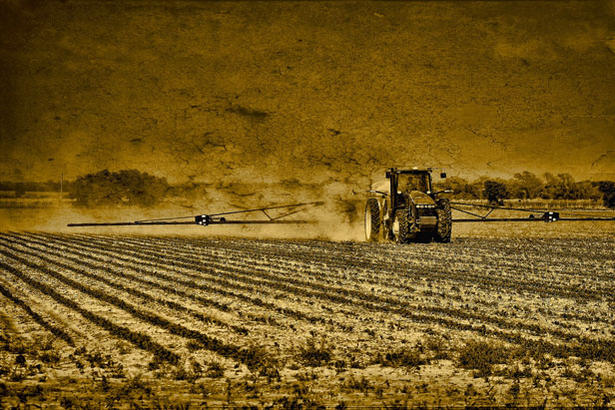
WASHINGTON—The hunt for cuts has come to this: Even agriculture subsidies—billions in spending both parties have embraced for years—are on the table.
With the farm economy booming and Washington on a diet, a program set up in the 1990s that cuts checks to farmers could be trimmed or eliminated next year when Congress writes a new five-year farm bill.
A group of conservative lawmakers has set its sights on these direct payments, and even farm-state Democrats who like the program say high crop prices make the outlays of about $5 billion a year harder to justify. Recently, the National Corn Growers Association, an industry lobby group, urged Congress to revamp the program, fearing it would be eliminated altogether.
Washington is looking everywhere for savings, even to programs once viewed as sacrosanct, including farm programs and defense spending.
Republican House Budget Committee Chairman Paul Ryan's blueprint for the fiscal 2012 budget puts agriculture subsidies in the cross hairs, seeking to cut $30 billion over a decade—starting when the next farm bill is passed in 2012—out of a total of some $150 billion in total expected spending on farm subsidies.
"We are very focused on getting a grip on spending—that means a lot of things even I like," said House Agriculture Committee Chairman Frank Lucas (R., Okla.) The direct payments have "a target on them," said Sen. Mike Johanns (R., Neb.), a former supporter of the program.
The farm payments at risk were supposed to be temporary. Lawmakers designed the program in the 1996 farm bill to wean farmers of rice, feed grains, cotton and later soybeans off years of subsidies tied to keeping portions of land fallow.
The direct payments have endured and are now a cornerstone of American farm subsidies. The $5 billion in direct payments to farmers accounts for a third of the roughly $15 billion in total farm subsidies last year, according to government data.
Benefiting are about one million farmers on 260 million acres of land spread around 364 of 435 congressional districts, according to the Agriculture Department and the Environmental Working Group, a organization that wants to eliminate some farm subsidies and use the money to protect natural habitats.
With the farm sector booming—the USDA estimates net farm income this year will be the second-highest in 35 years—direct payments have become an easy target. Iowa State University economist Chad Hart notes that the payments go to farmers regardless of crop price or quality—a way to provide assistance without violating international trade rules.
Farm subsidies have survived previous attempts to cut them back, and defenders will likely cite the continuing support for farmers in Japan and the European Union. This time, the U.S. industry has pared its defense of the status quo.
"Our members of Congress are telling us that they just can't support this program anymore," said Anthony Bush, a policy expert with the National Corn Growers Association.
"In times of record-high prices [the government is] still handing out money like this, it's just politically not possible, feasible or popular these days," he said.
Mr. Bush said corn farmers have the most to lose if direct payments are eliminated altogether. He said $2.1 billion of the roughly $5 billion in direct payments go to such farmers.
Corn futures Wednesday settled at $7.63 a bushel, down slightly after reaching an all-time high above $7.70 Tuesday. Prices have more than doubled since last summer on strong export demand, record ethanol output and steady buying by domestic livestock producers.
The National Corn Growers Association voted earlier this month to "investigate transitioning direct payments" into a more politically acceptable form of subsidy.
Roger Johnson, president of the National Farmers Union, said the direct subsidies have become indefensible because they don't go to farmers who need them to survive tough times.
Most of the payments go to the largest farmers in the U.S., given the amount of land they own. From 2002, when the program was expanded, through 2010, the top 10% of recipients received 67% of the funds, according to David DeGennaro, an Environmental Working Group legislative analyst.
Mr. Lucas of Oklahoma, the Republican chairman of the House Agriculture Committee, said in an interview that direct payments were fair game for lawmakers looking to cut spending next year. He still wants to resist some cuts, a point of view he outlined in a March 15 letter to the House Budget Committee written with Rep. Collin Peterson (D., Minn.). He didn't specify what might be protected.
Senate Majority Leader Harry Reid (D., Nev.), however, suggested earlier this month that farm subsidies were a likely budget-cutting target. He didn't specify which programs, but said, "Commodity price for farms, farm products have never been—never been higher than they are today. There's money there."
Supporting an Agricultural Model that is resource conserving,
socially supportive, commercially competitive, and environmentally sound.
Saturday, April 9, 2011
Monday, April 4, 2011
Study: No-Till Farming Reduces Greenhouse Gas Emissions
In the January edition of the Soil Science Society of America Journal, researchers at Purdue University published a report that found that cropland, left unplowed between planting seasons, significantly reduces the amount of nitrous oxide, a potent greenhouse gas (GHG), released into the atmosphere compared to conventionally plowed fields.The federally funded study concluded that no-till farming can help counteract global warming, as well as help farmers use their costly nitrogen-based fertilizers more efficiently. Researchers looked at the amounts of nitrous oxide released by no-till fields and plowed fields for three years, and found that no-till fields released 57 percent and 40 percent, respectively, less nitrous oxide than two types of tilling called chisel tilling and moldboard tilling.
The researchers also found that emissions were fewer in fields with rotating crops than fields planted only with one crop each year. Nitrous oxide contains 310 times the heat-trapping power of carbon dioxide and can remain in the atmosphere for 120 years. The findings represent another benefit to the practice of no-till farming, which has been shown to reduce erosion and improve soil quality. Sixty-eight percent of U.S. nitrous oxide emissions came from farmland in 2008, according to the Environmental Protection Agency.
Sunday, February 20, 2011
The Six-Legged Meat of the Future
At the London restaurant Archipelago, diners can order the $11 Baby Bee Brulee: a creamy custard topped with a crunchy little bee. In New York, the Mexican restaurant Toloache offers $11 chapulines tacos: two tacos stuffed with Oaxacan-style dried grasshoppers.
Could beetles, dragonfly larvae and water bug caviar be the meat of the future? As the global population booms and demand strains the world's supply of meat, there's a growing need for alternate animal proteins. Insects are high in protein, B vitamins and minerals like iron and zinc, and they're low in fat. Insects are easier to raise than livestock, and they produce less waste. Insects are abundant. Of all the known animal species, 80% walk on six legs; over 1,000 edible species have been identified. And the taste? It's often described as "nutty."
The vast majority of the developing world already eats insects. In Laos and Thailand, weaver-ant pupae are a highly prized and nutritious delicacy. They are prepared with shallots, lettuce, chilies, lime and spices and served with sticky rice. Further back in history, the ancient Romans considered beetle larvae to be gourmet fare, and the Old Testament mentions eating crickets and grasshoppers. In the 20th century, the Japanese emperor Hirohito's favorite meal was a mixture of cooked rice, canned wasps (including larvae, pupae and adults), soy sauce and sugar.
Will Westerners ever take to insects as food? It's possible. We are entomologists at Wageningen University, and we started promoting insects as food in the Netherlands in the 1990s. Many people laughed—and cringed—at first, but interest gradually became more serious. In 2006 we created a "Wageningen—City of Insects" science festival to promote the idea of eating bugs; it attracted more than 20,000 visitors.
Over the past two years, three Dutch insect-raising companies, which normally produce feed for animals in zoos, have set up special production lines to raise locusts and mealworms for human consumption. Now those insects are sold, freeze-dried, in two dozen retail food outlets that cater to restaurants. A few restaurants in the Netherlands have already placed insects on the menu, with locusts and mealworms (beetle larvae) usually among the dishes.
Insects have a reputation for being dirty and carrying diseases—yet less than 0.5% of all known insect species are harmful to people, farm animals or crop plants. When raised under hygienic conditions—eating bugs straight out of the backyard generally isn't recommended—many insects are perfectly safe to eat.
Meanwhile, our food needs are on the rise. The human population is expected to grow from six billion in 2000 to nine billion in 2050. Meat production is expected to double in the same period, as demand grows from rising wealth. Pastures and fodder already use up 70% of all agricultural land, so increasing livestock production would require expanding agricultural acreage at the expense of rain forests and other natural lands. Officials at the United Nations Food and Agriculture Organization recently predicted that beef could become an extreme luxury item by 2050, like caviar, due to rising production costs.
Raising insects for food would avoid many of the problems associated with livestock. For instance, swine and humans are similar enough that they can share many diseases. Such co-infection can yield new disease strains that are lethal to humans, as happened during a swine fever outbreak in the Netherlands in the late 1990s. Because insects are so different from us, such risks are accordingly lower.
Insects are also cold-blooded, so they don't need as much feed as animals like pigs and cows, which consume more energy to maintain their body temperatures. Ten pounds of feed yields one pound of beef, three pounds of pork, five pounds of chicken and up to six pounds of insect meat.
Insects produce less waste, too. The proportion of livestock that is not edible after processing is 30% for pork, 35% for chicken, 45% for beef and 65% for lamb. By contrast, only 20% of a cricket is inedible.
Raising insects requires relatively little water, especially as compared to the production of conventional meat (it takes more than 10 gallons of water, for instance, to produce about two pounds of beef). Insects also produce far less ammonia and other greenhouse gases per pound of body weight. Livestock is responsible for at least 10% of all greenhouse gas emissions.
Raising insects is more humane as well. Housing cattle, swine or chicken in high densities causes stress to the animals, but insects like mealworms and locusts naturally like to live in dense quarters. The insects can be crowded into vertical stacked trays or cages. Nor do bug farms have to be restricted to rural areas; they could sprout up anywhere, from a suburban strip mall to an apartment building. Enterprising gourmets could even keep a few trays of mealworms in the garage to ensure a fresh supply.
The first insect fare is likely to be incorporated subtly into dishes, as a replacement for meat in meatballs and sauces. It also can be mixed into prepared foods to boost their nutritional value—like putting mealworm paste into a quiche. And dry-roasted insects can be used as a replacement for nuts in baked goods like cookies and breads.
We continue to make progress in the Netherlands, where the ministry of agriculture is funding a new $1.3 million research program to develop ways to raise edible insects on food waste, such as brewers' grain (a byproduct of beer brewing), soyhulls (the skin of the soybean) and apple pomace (the pulpy remains after the juice has been pressed out). Other research is focusing on how protein could be extracted from insects and used in processed foods.
Though it is true that intentionally eating insects is common only in developing countries, everyone already eats some amount of insects. The average person consumes about a pound of insects per year, mostly mixed into other foods. In the U.S., most processed foods contain small amounts of insects, within limits set by the Food and Drug Administration. For chocolate, the FDA limit is 60 insect fragments per 100 grams. Peanut butter can have up to 30 insect parts per 100 grams, and fruit juice can have five fruit-fly eggs and one or two larvae per 250 milliliters (just over a cup). We also use many insect products to dye our foods, such as the red dye cochineal in imitation crab sticks, Campari and candies. So we're already some of the way there in making six-legged creatures a regular part of our diet.
Not long ago, foods like kiwis and sushi weren't widely known or available. It is quite likely that in 2020 we will look back in surprise at the era when our menus didn't include locusts, beetle larvae, dragonfly larvae, crickets and other insect delights.
Could beetles, dragonfly larvae and water bug caviar be the meat of the future? As the global population booms and demand strains the world's supply of meat, there's a growing need for alternate animal proteins. Insects are high in protein, B vitamins and minerals like iron and zinc, and they're low in fat. Insects are easier to raise than livestock, and they produce less waste. Insects are abundant. Of all the known animal species, 80% walk on six legs; over 1,000 edible species have been identified. And the taste? It's often described as "nutty."
The vast majority of the developing world already eats insects. In Laos and Thailand, weaver-ant pupae are a highly prized and nutritious delicacy. They are prepared with shallots, lettuce, chilies, lime and spices and served with sticky rice. Further back in history, the ancient Romans considered beetle larvae to be gourmet fare, and the Old Testament mentions eating crickets and grasshoppers. In the 20th century, the Japanese emperor Hirohito's favorite meal was a mixture of cooked rice, canned wasps (including larvae, pupae and adults), soy sauce and sugar.
Will Westerners ever take to insects as food? It's possible. We are entomologists at Wageningen University, and we started promoting insects as food in the Netherlands in the 1990s. Many people laughed—and cringed—at first, but interest gradually became more serious. In 2006 we created a "Wageningen—City of Insects" science festival to promote the idea of eating bugs; it attracted more than 20,000 visitors.
Over the past two years, three Dutch insect-raising companies, which normally produce feed for animals in zoos, have set up special production lines to raise locusts and mealworms for human consumption. Now those insects are sold, freeze-dried, in two dozen retail food outlets that cater to restaurants. A few restaurants in the Netherlands have already placed insects on the menu, with locusts and mealworms (beetle larvae) usually among the dishes.
Insects have a reputation for being dirty and carrying diseases—yet less than 0.5% of all known insect species are harmful to people, farm animals or crop plants. When raised under hygienic conditions—eating bugs straight out of the backyard generally isn't recommended—many insects are perfectly safe to eat.
Meanwhile, our food needs are on the rise. The human population is expected to grow from six billion in 2000 to nine billion in 2050. Meat production is expected to double in the same period, as demand grows from rising wealth. Pastures and fodder already use up 70% of all agricultural land, so increasing livestock production would require expanding agricultural acreage at the expense of rain forests and other natural lands. Officials at the United Nations Food and Agriculture Organization recently predicted that beef could become an extreme luxury item by 2050, like caviar, due to rising production costs.
Raising insects for food would avoid many of the problems associated with livestock. For instance, swine and humans are similar enough that they can share many diseases. Such co-infection can yield new disease strains that are lethal to humans, as happened during a swine fever outbreak in the Netherlands in the late 1990s. Because insects are so different from us, such risks are accordingly lower.
Insects are also cold-blooded, so they don't need as much feed as animals like pigs and cows, which consume more energy to maintain their body temperatures. Ten pounds of feed yields one pound of beef, three pounds of pork, five pounds of chicken and up to six pounds of insect meat.
Insects produce less waste, too. The proportion of livestock that is not edible after processing is 30% for pork, 35% for chicken, 45% for beef and 65% for lamb. By contrast, only 20% of a cricket is inedible.
Raising insects requires relatively little water, especially as compared to the production of conventional meat (it takes more than 10 gallons of water, for instance, to produce about two pounds of beef). Insects also produce far less ammonia and other greenhouse gases per pound of body weight. Livestock is responsible for at least 10% of all greenhouse gas emissions.
Raising insects is more humane as well. Housing cattle, swine or chicken in high densities causes stress to the animals, but insects like mealworms and locusts naturally like to live in dense quarters. The insects can be crowded into vertical stacked trays or cages. Nor do bug farms have to be restricted to rural areas; they could sprout up anywhere, from a suburban strip mall to an apartment building. Enterprising gourmets could even keep a few trays of mealworms in the garage to ensure a fresh supply.
The first insect fare is likely to be incorporated subtly into dishes, as a replacement for meat in meatballs and sauces. It also can be mixed into prepared foods to boost their nutritional value—like putting mealworm paste into a quiche. And dry-roasted insects can be used as a replacement for nuts in baked goods like cookies and breads.
We continue to make progress in the Netherlands, where the ministry of agriculture is funding a new $1.3 million research program to develop ways to raise edible insects on food waste, such as brewers' grain (a byproduct of beer brewing), soyhulls (the skin of the soybean) and apple pomace (the pulpy remains after the juice has been pressed out). Other research is focusing on how protein could be extracted from insects and used in processed foods.
Though it is true that intentionally eating insects is common only in developing countries, everyone already eats some amount of insects. The average person consumes about a pound of insects per year, mostly mixed into other foods. In the U.S., most processed foods contain small amounts of insects, within limits set by the Food and Drug Administration. For chocolate, the FDA limit is 60 insect fragments per 100 grams. Peanut butter can have up to 30 insect parts per 100 grams, and fruit juice can have five fruit-fly eggs and one or two larvae per 250 milliliters (just over a cup). We also use many insect products to dye our foods, such as the red dye cochineal in imitation crab sticks, Campari and candies. So we're already some of the way there in making six-legged creatures a regular part of our diet.
Not long ago, foods like kiwis and sushi weren't widely known or available. It is quite likely that in 2020 we will look back in surprise at the era when our menus didn't include locusts, beetle larvae, dragonfly larvae, crickets and other insect delights.
Wednesday, December 1, 2010
Rising Demand, Prices Boost Farm Income 31%
The U.S. Agriculture Department said Tuesday that net farm income, its rough measure of the agriculture sector's profitability, is expected to jump 31% this year to $81.6 billion from $62.2 billion last year.
The forecast shows how the global recession only temporarily interrupted a farmbelt boom that is being driven in large part by the expanding appetites of emerging nations such as China and the U.S. biofuels industry.
"The mid-1970s was the last comparable period when U.S. farming enjoyed multiple years of sustained levels of high output and income," the USDA report stated.
The Tuesday report is the second time the USDA has adjusted upward its profit outlook since the agency issued its original forecast of $63 billion in February. As a result, the sector's profitability has nearly returned to its level in 2008, when net farm income hit $86.6 billion. The government will issue its initial forecast for 2011 net farm income in February.
Thanks to broadly rising prices of livestock and major crops such as cotton, corn and wheat, farmers are generating 10.4% more revenue this year, the USDA calculates. At the same time, the farm sector's production expenses are rising just 2%.
One significant expense that took an unusual tumble this year was the price of seed, which had climbed so sharply since the advent of crop biotechnology in the mid-1990s that farmers complained loudly during the workshops held by the Obama administration this year to look at competition issues in agriculture.
According to the USDA, the prices farmers are paying for seeds this year are down 3.9%. Before this year, farmers saw their seed expenses jump 41% from 2006 through 2009, when it hit $15.5 billion, the USDA said.
Despite high grain prices and the surge in profitability, U.S. farmers are slated to collect about $12.4 billion in aid from Uncle Sam this year, close to the amount of federal aid they reaped in 2009.
Growers are getting about $4.8 billion in direct payments that aren't pegged to market prices, as well as checks for land-idling conservation programs and weather-related disasters, among other things.
The forecast shows how the global recession only temporarily interrupted a farmbelt boom that is being driven in large part by the expanding appetites of emerging nations such as China and the U.S. biofuels industry.
"The mid-1970s was the last comparable period when U.S. farming enjoyed multiple years of sustained levels of high output and income," the USDA report stated.
The Tuesday report is the second time the USDA has adjusted upward its profit outlook since the agency issued its original forecast of $63 billion in February. As a result, the sector's profitability has nearly returned to its level in 2008, when net farm income hit $86.6 billion. The government will issue its initial forecast for 2011 net farm income in February.
Thanks to broadly rising prices of livestock and major crops such as cotton, corn and wheat, farmers are generating 10.4% more revenue this year, the USDA calculates. At the same time, the farm sector's production expenses are rising just 2%.
One significant expense that took an unusual tumble this year was the price of seed, which had climbed so sharply since the advent of crop biotechnology in the mid-1990s that farmers complained loudly during the workshops held by the Obama administration this year to look at competition issues in agriculture.
According to the USDA, the prices farmers are paying for seeds this year are down 3.9%. Before this year, farmers saw their seed expenses jump 41% from 2006 through 2009, when it hit $15.5 billion, the USDA said.
Despite high grain prices and the surge in profitability, U.S. farmers are slated to collect about $12.4 billion in aid from Uncle Sam this year, close to the amount of federal aid they reaped in 2009.
Growers are getting about $4.8 billion in direct payments that aren't pegged to market prices, as well as checks for land-idling conservation programs and weather-related disasters, among other things.
Saturday, November 20, 2010
Less Corn, Saner Fishing and Soda on Fridays
Chef Mario Batali looks ahead to the future of food, from farms to school lunches, and asks for moderation.
By MARIO BATALI What lies ahead in the future of food? I don't think we'll be eating high-tech food pills anytime soon, thankfully. But with problems like collapsing fisheries and rising levels of childhood obesity, we do need to step back and consider where we want to be a few decades from now.
The future of food in America hinges on our ability to listen to what the earth and scientists and farmers are telling us. The issues surrounding food are not all black and white, good or bad. We must embrace moderation, from big business to the small producer, from steak to tofu. My own concerns are hardly unique to me—and I neglect countless important points—so think of what follows as the start of a conversation.
Corn as a Vegetable
Corn will continue to be planted "fence row to fence row" and subsidized by the U.S. government, sneaking its way into our bread and cereal and every other product, often in the form of high-fructose corn syrup. But farmers don't plant corn because they love corn syrup, or because they prefer seeing their crop used to fill the tank of an SUV with biofuel rather than to feed people in the developing world. They do it because it's how they can make money.
I'd hope that we can give our corn farmers more economically viable options, such as sustainable soy and alfalfa, and tell the American government that we want our corn to be a vegetable again. We might even stop making villains of all sugars and come to realize that moderation is the key. Eat all sugars, including high-fructose corn syrup, in moderation.
Catching Less
Fisheries all over America are collapsing. If we continue to ignore the experts' advice, we will definitely see the extinction of bluefin tuna and many other species. Entire fishing villages are losing their livelihoods at breakneck speed. I believe that Americans can learn to eat fish responsibly, sparing some of the more endangered species like Atlantic cod and grouper, just as fishermen can learn to accept seasonal quotas as a way to preserve jobs and income for generations to come.
Minding Our Meat
Industrial livestock farms are polluting and inhumane, and they account for much of the pathogenic bacteria, like salmonella, that end up in our meat and poultry (and even our leafy greens). They also sustain notoriously bad working conditions for the people that labor in them. We need to pay more attention to where our meat comes from, or we will continue to pay the price in public health and worker safety.
More encouragingly, the infrastructure for distributing meat from small farmers is improving, with Wal-Mart, of all companies, at the cutting edge. Campaigns like "meatless Monday" have also gained momentum. It may be unreasonable to expect everyone to become a vegetarian, but is it such a stretch for Americans to skip meat just one day a week?
Fisheries all over America are collapsing. If we continue to ignore the experts' advice, we will definitely see the extinction of bluefin tuna and many other species. Entire fishing villages are losing their livelihoods at breakneck speed. I believe that Americans can learn to eat fish responsibly, sparing some of the more endangered species like Atlantic cod and grouper, just as fishermen can learn to accept seasonal quotas as a way to preserve jobs and income for generations to come.
Minding Our Meat
Industrial livestock farms are polluting and inhumane, and they account for much of the pathogenic bacteria, like salmonella, that end up in our meat and poultry (and even our leafy greens). They also sustain notoriously bad working conditions for the people that labor in them. We need to pay more attention to where our meat comes from, or we will continue to pay the price in public health and worker safety.
More encouragingly, the infrastructure for distributing meat from small farmers is improving, with Wal-Mart, of all companies, at the cutting edge. Campaigns like "meatless Monday" have also gained momentum. It may be unreasonable to expect everyone to become a vegetarian, but is it such a stretch for Americans to skip meat just one day a week?
Sweet Drinks
If Americans, especially younger Americans, keep drinking soda at the rate of 1,000 calories a day, we will continue to pay the price in higher rates of obesity, diabetes and heart disease. But maybe we can take Michael Pollan's sensible advice and "at least return soda to its place as a special-occasion drink." (How about Soda Fountain Fridays, along with pizza for a special food/drink combo?) And perhaps Americans will finally wake up and realize that the bottled-water companies are literally drilling up the water from under their houses and selling it back to them in plastic at the corner store.
Help for Lunch Ladies
My own Mario Batali Foundation is all about kids, so this issue is particularly dear to me. I hope that the future of food in America holds a drastic and intelligent update of the USDA-sponsored national school lunch program, which is one of our most successful social welfare efforts, feeding some 30 million children. We can't forget that many of these children depend on school lunch for their only meal each day, which makes it crucial that they get the nutrition they need.
To do this, the program needs to change its current focus on simply meeting calorie standards and holding down fat levels. Switching to an emphasis on certain amounts of particular foods, like lean protein, whole grains and vegetables, would give lunch ladies all over America some guidance in meeting a wider range of nutritional needs.
If Americans, especially younger Americans, keep drinking soda at the rate of 1,000 calories a day, we will continue to pay the price in higher rates of obesity, diabetes and heart disease. But maybe we can take Michael Pollan's sensible advice and "at least return soda to its place as a special-occasion drink." (How about Soda Fountain Fridays, along with pizza for a special food/drink combo?) And perhaps Americans will finally wake up and realize that the bottled-water companies are literally drilling up the water from under their houses and selling it back to them in plastic at the corner store.
Help for Lunch Ladies
My own Mario Batali Foundation is all about kids, so this issue is particularly dear to me. I hope that the future of food in America holds a drastic and intelligent update of the USDA-sponsored national school lunch program, which is one of our most successful social welfare efforts, feeding some 30 million children. We can't forget that many of these children depend on school lunch for their only meal each day, which makes it crucial that they get the nutrition they need.
To do this, the program needs to change its current focus on simply meeting calorie standards and holding down fat levels. Switching to an emphasis on certain amounts of particular foods, like lean protein, whole grains and vegetables, would give lunch ladies all over America some guidance in meeting a wider range of nutritional needs.
Monday, October 25, 2010
Those Amber Waves Are Fueling Exports
Foreign demand for U.S. grain keeps rising, and farmers have cash to spare. Just a few years ago, who would have guessed that farms would turn out to be a bright spot in the U.S. economy? Farmers were fretting about falling prices and mounting competition from Russia and Ukraine. Today drought has withered much of the Russian and Ukrainian crops, and the world needs more grain—and soybeans and pork—than ever. The best place to get it: the fertile soil of the U.S. Midwest and South, home to some of the most productive farms on earth.
In the first eight months of 2010, U.S. agricultural exports increased 14 percent, to $69.8 billion, from the same period a year earlier, according to the most recent U.S. Agriculture Dept. data. Joseph Glauber, chief economist for the USDA, says farm exports in the year that began on Oct. 1 may top the 2008 record.
This cornucopia is providing an unexpected boost to President Barack Obama's drive to double exports by 2015. China's need for cotton, pork, corn, and soybeans will make it the second-biggest U.S. agricultural trading partner in 2011, the USDA estimates. Shipments of farm products to China will total $15 billion, compared with Canada's $16.8 billion and Mexico's $14.6 billion. Corn prices are up over 60 percent since June, while wheat as much as doubled. "It's going to be the best year American farmers have had in two and a half decades," says Dennis Gartman, an economist and editor of The Gartman Letter in Suffolk, Va.
The cash that farmers are fingering in their pockets is boosting companies at home as well. While agriculture accounts for just 1 percent of the $14.3 trillion U.S. economy, the actual impact of surging prices may be 10 times more once spending on equipment, seeds, grain handling, and food processing is added, says Jason Henderson, an economist at the Federal Reserve Bank of Kansas City.
Sales of farm equipment are correlated to growers' cash receipts, which should increase 24 percent, to $118.4 billion, for majåor crops in the 2010-11 season, Ann Duignan, an analyst at JPMorgan Chase (JPM) in New York, said in an Oct. 8 report. That's good news for Moline (Ill.)-based Deere (DE), the world's largest farm-equipment maker as well as rivals Amsterdam-based CNH Global (CNH) and Duluth (Ga.)-based Agco (AGCO), she says.
Deere's per-share profit will more than double, to $4.25, in the current fiscal year, according to the mean estimate of eight analysts surveyed by Bloomberg. Cargill, the giant grain handler and food processor, said on Oct. 12 that thanks to price volatility and the performance of its affiliate, fertilizer producer Mosaic (MOS), profit for the latest quarter rose 68 percent.
Back in the 1980s, falling prices, record-high interest rates, and too much farmland bought on credit prompted a wave of farm bankruptcies. Now low interest rates are amplifying the boom, says Tom Neher, vice-president for AgStar Financial in Rochester, Minn. The bank issued twice as many farm-equipment loans as expected in a recent promotion. "I've seen more brand-new combines bought than I've seen for a long, long time," says Neher, who helps manage $2.1 billion in grain-related loans and leases for AgStar. "When you can get a machinery loan for 4 percent interest, that's about as low as it ever gets."
There are limits to how much cash will trickle down to the Main Streets of rural America, says Ernie Goss, an economics professor at Creighton University in Omaha: "You have fewer and fewer farms, and fewer and fewer farm families, so it hasn't spilled into small businesses like the drugstore or the shoe store." Farm prices have been supported by a lower dollar, which boosts exports, and not by rising domestic demand, says Goss. Small businesses "are mystified by all these reports about how wonderful the rural economy is. That's because they're selling in Greeley, Neb., and the farmer out there is selling in Beijing."
Still, the mix of foreign demand and a weak dollar is the best news farm country has had for decades. "It is a perfect situation for U.S. farmers, the best since the early 1970s," says Bill Adams, a trader at ACT Currency Partner, a currency and commodity specialist in Zurich. "There will be quite a few Cadillacs sold in the Midwest this Christmas."
The bottom line: Farm exports from the U.S. are rising fast. That's benefiting farm-equipment makers, fertilizer companies, and other suppliers. By Whitney McFerron, Jeff Wilson, Shruti Singh and Elizabeth Campbell
In the first eight months of 2010, U.S. agricultural exports increased 14 percent, to $69.8 billion, from the same period a year earlier, according to the most recent U.S. Agriculture Dept. data. Joseph Glauber, chief economist for the USDA, says farm exports in the year that began on Oct. 1 may top the 2008 record.
This cornucopia is providing an unexpected boost to President Barack Obama's drive to double exports by 2015. China's need for cotton, pork, corn, and soybeans will make it the second-biggest U.S. agricultural trading partner in 2011, the USDA estimates. Shipments of farm products to China will total $15 billion, compared with Canada's $16.8 billion and Mexico's $14.6 billion. Corn prices are up over 60 percent since June, while wheat as much as doubled. "It's going to be the best year American farmers have had in two and a half decades," says Dennis Gartman, an economist and editor of The Gartman Letter in Suffolk, Va.
The cash that farmers are fingering in their pockets is boosting companies at home as well. While agriculture accounts for just 1 percent of the $14.3 trillion U.S. economy, the actual impact of surging prices may be 10 times more once spending on equipment, seeds, grain handling, and food processing is added, says Jason Henderson, an economist at the Federal Reserve Bank of Kansas City.
Sales of farm equipment are correlated to growers' cash receipts, which should increase 24 percent, to $118.4 billion, for majåor crops in the 2010-11 season, Ann Duignan, an analyst at JPMorgan Chase (JPM) in New York, said in an Oct. 8 report. That's good news for Moline (Ill.)-based Deere (DE), the world's largest farm-equipment maker as well as rivals Amsterdam-based CNH Global (CNH) and Duluth (Ga.)-based Agco (AGCO), she says.
Deere's per-share profit will more than double, to $4.25, in the current fiscal year, according to the mean estimate of eight analysts surveyed by Bloomberg. Cargill, the giant grain handler and food processor, said on Oct. 12 that thanks to price volatility and the performance of its affiliate, fertilizer producer Mosaic (MOS), profit for the latest quarter rose 68 percent.
Back in the 1980s, falling prices, record-high interest rates, and too much farmland bought on credit prompted a wave of farm bankruptcies. Now low interest rates are amplifying the boom, says Tom Neher, vice-president for AgStar Financial in Rochester, Minn. The bank issued twice as many farm-equipment loans as expected in a recent promotion. "I've seen more brand-new combines bought than I've seen for a long, long time," says Neher, who helps manage $2.1 billion in grain-related loans and leases for AgStar. "When you can get a machinery loan for 4 percent interest, that's about as low as it ever gets."
There are limits to how much cash will trickle down to the Main Streets of rural America, says Ernie Goss, an economics professor at Creighton University in Omaha: "You have fewer and fewer farms, and fewer and fewer farm families, so it hasn't spilled into small businesses like the drugstore or the shoe store." Farm prices have been supported by a lower dollar, which boosts exports, and not by rising domestic demand, says Goss. Small businesses "are mystified by all these reports about how wonderful the rural economy is. That's because they're selling in Greeley, Neb., and the farmer out there is selling in Beijing."
Still, the mix of foreign demand and a weak dollar is the best news farm country has had for decades. "It is a perfect situation for U.S. farmers, the best since the early 1970s," says Bill Adams, a trader at ACT Currency Partner, a currency and commodity specialist in Zurich. "There will be quite a few Cadillacs sold in the Midwest this Christmas."
The bottom line: Farm exports from the U.S. are rising fast. That's benefiting farm-equipment makers, fertilizer companies, and other suppliers. By Whitney McFerron, Jeff Wilson, Shruti Singh and Elizabeth Campbell
Sunday, October 24, 2010
Why Monsanto is paying farmers to spray its rivals’ herbicides
Monsanto's ongoing humiliation proceeds apace. No, I'm not referring to the company's triumph in our recent "Villains of Food" poll. Instead, I'm talking about a Tuesday item from the Des Moines Register'sPhilip Brasher, reporting that Monsanto has been forced into the unenviable position of having to pay farmers to spray the herbicides of rival companies.
If you tend large plantings of Monsanto's "Roundup Ready" soy or cotton, genetically engineered to withstand application of the company's Roundup herbicide (which will kill the weeds -- supposedly -- but not the crops), Monsanto will cut you a $6 check for every acre on which you apply at least two other herbicides. One imagines farmers counting their cash as literally millions of acres across the South and Midwest get doused with Monsanto-subsidized poison cocktails.
The move is the latest step in the abject reversal of Monsanto's longtime claim: that Roundup Ready technology solved the age-old problem of weeds in an ecologically benign way. The company had developed a novel trait that would allow crops to survive unlimited lashings of glyphosate, Monsanto's then-patent-protected, broad-spectrum herbicide. It was kind of a miracle technology. Farmers would no longer have to think about weeds; glyphosate, which killed everything but the trait-endowed crop, would do all the work. Moreover, Monsanto promised, Roundup was less toxic to humans and wildlife than the herbicides then in use; and it allowed farmers to decrease erosion by dramatically reducing tillage -- a common method of weed control.
There was just one problem, which the Union of Concerned Scientists pointed out as early as 1993, New York University nutritionist and food-politics author Marion Nestle recently reminded us. When farmers douse the same field year after year with the same herbicide, certain weeds will develop resistance. When they do, it will take ever-larger doses of that herbicide to kill them -- making the survivors even hardier. Eventually, it will be time to bring in in the older, harsher herbicides to do the trick, UCS predicted.
At the time and for years after, Monsanto dismissed the concerns as "hypothetical," Nestle reports. Today, Roundup Ready seeds have conquered prime U.S. farmland from the deep South to the northern prairies -- 90 percent of soybean acres and 70 percent of corn and cotton acres are planted in Roundup Ready seeds. Monsanto successfully conquered a fourth crop, sugar beets, gaining a stunning 95 percent market share after the USDA approved Roundup Ready beet seeds in 2008. But recently, as I reported here, a federal judge halted future plantings of Roundup Ready beets until the USDA completes an environmental impact study of their effects.
Given what happened to other Roundup Ready crops, it's hard to imagine that the USDA can come up with an environmental impact study that will exonerate Monsanto's sugar beet seeds. Today, there are no fewer than 10 weed species resistant to Roundup, thriving "in at least 22 states infesting millions of acres," The New York Times recently reported. And the ways farmers are responding to them are hardly ecologically sound: jacked-up application rates of Roundup, supplemented by other, harsher poisons.
And as Monsanto's once-celebrated Roundup Ready traits come under fire, there's another Roundup problem no one's talking about: Roundup itself, once hailed as a an ecologically benign herbicide, is looking increasingly problematic. A study by France's University of Caen last year found that the herbicide's allegedly "inert" ingredients magnify glyphosate's toxic effects. According to the study, "the proprietary mixtures available on the market could cause cell damage and even death" at levels commonly used on farm fields.
Moreover, the annual cascade of Roundup on vast swaths of prime farmland also appears to be undermining soil health and productivity, as this startling recent report shows.
Meanwhile, the endlessly repeated claim that Roundup Ready technology saves "millions of tons" of soil from erosion, by allowing farmers to avoid tilling to kill weeds, appears to be wildly trumped up. According to Environmental Working Group's reading of the USDA's 2007 National Resource Inventory, "there has been no progress in reducing soil erosion in the Corn Belt since 1997." (The Corn Belt is the section of the Midwest where the great bulk of Roundup Ready corn and soy are planted.) "The NRI shows that an average-sized Iowa farm loses five tons of high quality topsoil per acre each year," EWG writes.
In short, Monsanto's Roundup Ready technology is emerging as an environmental disaster. The question isn't why a judge demanded an environmental impact study of Roundup Ready sugar beets in 2010; it's that no one did so in 1996 before the technology was rolled out. After all, the Union of Concerned Scientists was already quite, well, concerned back then.
As I wrote in June, rather than spark a reassessment of the wisdom of relying on toxic chemicals, the failure of Roundup Ready has the U.S. agricultural establishment scrambling to intensify chemical use. Companies like Dow Agriscience are dusting off old, highly toxic poisons like 2, 4-D and promoting them as the "answer" to Roundup's problems.
In a better world, farmers would be looking to non-chemical methods for controlling weeds: crop rotations, mulching, cover crops, etc. Instead, they're being paid by Monsanto to ramp up application of poisons. Perhaps the USDA's main research arm, the National Institute of Food and Agriculture, will rise to the occasion by funding research in non-chemical weed-control methods? Not likely, since the Obama administration tapped a staunch Monsanto man to lead that crucial agency.
But instead of true innovation, we have the spectacle of Monsanto paying farmers to dump vast chemical cocktails onto land that not only feeds us, but also drains into our streams and rivers. BY Tom Philpott
Sprouting for Health
When we sprout grains, the grain itself is treated better, and therefore treats the human body better. We will review the nutritional and digestive benefits of sprouted grain breads, the methods for sprouting grains, and the formulation and process of a truly wonderful 100% sprouted grain bread.
With the sprouting method, products become far more digestible because the starches are turned into simple sugars; the proteins are broken down into amino acids; and the fats are converted into soluble fatty acids. The overall enzyme content of the product is greatly increased and the sprouting process.
With growing concerns about the American diet, many of us are beginning to reduce our intake of highly processed, white flour-based breads. Whole grain breads, whether wheat or rye, seeded or not, commercially-yeasted or naturally-leavened, are some of the many choices we consider when consuming our bread products. Bakeries from small to large have taken note, and more varieties of healthful breads are becoming available every day.
Read More
With the sprouting method, products become far more digestible because the starches are turned into simple sugars; the proteins are broken down into amino acids; and the fats are converted into soluble fatty acids. The overall enzyme content of the product is greatly increased and the sprouting process.
With growing concerns about the American diet, many of us are beginning to reduce our intake of highly processed, white flour-based breads. Whole grain breads, whether wheat or rye, seeded or not, commercially-yeasted or naturally-leavened, are some of the many choices we consider when consuming our bread products. Bakeries from small to large have taken note, and more varieties of healthful breads are becoming available every day.
Read More
Saturday, October 23, 2010
USDA To Resume Biomass Crop Assistance Program
The U.S. Department of Agriculture will resume a program to pay farmers for producing non-foodstock crops for conversion into biofuels and biomass-generated energy. Agriculture Secretary Vilsack announced publication of a final rule to implement the Biomass Crop Assistance Program (BCAP) during a speech Thursday to the National Press Club in Washington.
BCAP uses a dual approach to support the production of renewable energy. First, it provides assistance for the establishment and production of eligible renewable biomass crops within specified project areas. Producers who enter into BCAP contracts may receive payments of up to 75% of the cost of establishing eligible perennial crops. Further, they can receive payments for up to five years for annual or non-woody perennial crops and up to 15 years for woody perennial crops.
In addition, BCAP also assists agricultural and forest landowners and operators by providing matching payments for the transportation of certain eligible materials that are sold to qualified biomass conversion facilities. The facilities convert the materials into heat, power, biobased products or advanced biofuels.
The Secretary also announced jointly with the Federal Aviation Administration (FAA) a five year agreement to develop aviation fuel from forest and crop residues and other "green" feedstocks in order to decrease dependence on foreign oil and stabilize aviation fuel costs. Under the partnership, the agencies will bring together their experience in research, policy analysis and air transportation sector dynamics to assess the availability of different kinds of feedstocks that could be processed by bio-refineries to produce jet fuels.
The agencies already have existing programs and collaborative agreements with private and public partners and resources to help biorefiners develop cost-effective production plans for jet aircraft biofuels.
The Secretary also discussed a biofuels report prepared by USDA's Economic Research Service (ERS)that says replacing more petroleum with cost-competitive domestic biofuels reduces crude oil imports, thereby lowering prices for energy and benefiting the U.S. economy.
Read additional coverage at the link below.
The BCAP program previously operated as a pilot, pending publication of the final rule. Authorized in the Food, Conservation, and Energy Act of 2008, BCAP is designed to ensure that a sufficiently large base of new, non-food, non-feed biomass crops is established in anticipation of future demand for renewable energy consumption.
BCAP uses a dual approach to support the production of renewable energy. First, it provides assistance for the establishment and production of eligible renewable biomass crops within specified project areas. Producers who enter into BCAP contracts may receive payments of up to 75% of the cost of establishing eligible perennial crops. Further, they can receive payments for up to five years for annual or non-woody perennial crops and up to 15 years for woody perennial crops.
In addition, BCAP also assists agricultural and forest landowners and operators by providing matching payments for the transportation of certain eligible materials that are sold to qualified biomass conversion facilities. The facilities convert the materials into heat, power, biobased products or advanced biofuels.
The Secretary also announced jointly with the Federal Aviation Administration (FAA) a five year agreement to develop aviation fuel from forest and crop residues and other "green" feedstocks in order to decrease dependence on foreign oil and stabilize aviation fuel costs. Under the partnership, the agencies will bring together their experience in research, policy analysis and air transportation sector dynamics to assess the availability of different kinds of feedstocks that could be processed by bio-refineries to produce jet fuels.
The agencies already have existing programs and collaborative agreements with private and public partners and resources to help biorefiners develop cost-effective production plans for jet aircraft biofuels.
The Secretary also discussed a biofuels report prepared by USDA's Economic Research Service (ERS)that says replacing more petroleum with cost-competitive domestic biofuels reduces crude oil imports, thereby lowering prices for energy and benefiting the U.S. economy.
Read additional coverage at the link below.
The BCAP program previously operated as a pilot, pending publication of the final rule. Authorized in the Food, Conservation, and Energy Act of 2008, BCAP is designed to ensure that a sufficiently large base of new, non-food, non-feed biomass crops is established in anticipation of future demand for renewable energy consumption.
Tuesday, September 21, 2010
Saturday, September 18, 2010
The Philosophy of Saint Benoit Yogurt
Doing things right
We have always been located in Sonoma, but initially were unable to produce the yogurt on the farm which meant we had to haul the milk a short distance to make the yogurt. In July of 2008, we began transforming an old milking parlor on the Mattos farm into our new creamery. With a little help from people like Whole Foods and John Mattos (dairy partner) who believed in us, some ingenuity, many months of planning and forethought, our seeds have grown into a thriving and sustainable creamery. Uncle Bill helped bring the project to fruition, making sure the creamery reflected our mission and philosophy of respecting the land and food shed we cherish. He helped us design a system that reuses water from yogurt production for irrigation and reduces energy costs. He repurposed old materials from building sites such as doors and windows that he hand fitted into the existing building. Together we chose a new type of wall covering that is not only state of the art, it also just happens to be made from recycled plastic milk bottles. We kept the old cement walls that conserve the cool air, which will help us save energy when we install our new walk-in cooler. And best yet, the milk is right there… the girls are creating it from those lush organic pastures beneath our very eyes, every day, right outside the new-old windows of our new-old creamery.
The Four Seasons
The cows’ milk naturally varies according to the season. For example, at some points of the year the cows’ milk contains more carotene and therefore the cream layer is a buttery yellow color. At other times of the year, the cream is whiter. Because the lovely ladies are pasture-fed, this greatly affects their milk. In the hot summer months, the girls get quite thirsty and drink more. This means their milk may also contain more water and make the yogurt slightly thinner. January also brings this about, but it’s because the grass in the fields is so rich, green, and waterlogged that they get more water from the grass itself. The same processes can affect the cream content. Because we do not remove the fat and re-inject it into the yogurt (as most companies do) and do not add milk powder to thicken it, our yogurt has a seasonal quality to it. Two benefits are that you have a product that is closer to the original state of the ingredient, and that delightful new mixtures occur. For example, when the milk contains more water and the bees are buzzing away in heavy-pollen season, all the factors align to give a whole new twist to our honey yogurt. The milk flavor is slightly less prominent, the rich honey comes through even more, and you can even find a slight dusting of pollen on the cream layer!
We have always been located in Sonoma, but initially were unable to produce the yogurt on the farm which meant we had to haul the milk a short distance to make the yogurt. In July of 2008, we began transforming an old milking parlor on the Mattos farm into our new creamery. With a little help from people like Whole Foods and John Mattos (dairy partner) who believed in us, some ingenuity, many months of planning and forethought, our seeds have grown into a thriving and sustainable creamery. Uncle Bill helped bring the project to fruition, making sure the creamery reflected our mission and philosophy of respecting the land and food shed we cherish. He helped us design a system that reuses water from yogurt production for irrigation and reduces energy costs. He repurposed old materials from building sites such as doors and windows that he hand fitted into the existing building. Together we chose a new type of wall covering that is not only state of the art, it also just happens to be made from recycled plastic milk bottles. We kept the old cement walls that conserve the cool air, which will help us save energy when we install our new walk-in cooler. And best yet, the milk is right there… the girls are creating it from those lush organic pastures beneath our very eyes, every day, right outside the new-old windows of our new-old creamery.
The Four Seasons
The cows’ milk naturally varies according to the season. For example, at some points of the year the cows’ milk contains more carotene and therefore the cream layer is a buttery yellow color. At other times of the year, the cream is whiter. Because the lovely ladies are pasture-fed, this greatly affects their milk. In the hot summer months, the girls get quite thirsty and drink more. This means their milk may also contain more water and make the yogurt slightly thinner. January also brings this about, but it’s because the grass in the fields is so rich, green, and waterlogged that they get more water from the grass itself. The same processes can affect the cream content. Because we do not remove the fat and re-inject it into the yogurt (as most companies do) and do not add milk powder to thicken it, our yogurt has a seasonal quality to it. Two benefits are that you have a product that is closer to the original state of the ingredient, and that delightful new mixtures occur. For example, when the milk contains more water and the bees are buzzing away in heavy-pollen season, all the factors align to give a whole new twist to our honey yogurt. The milk flavor is slightly less prominent, the rich honey comes through even more, and you can even find a slight dusting of pollen on the cream layer!
Achadinha Cheese Company
Achadinha Cheese Company is owned by Jim and Donna Pacheco of Pacheco Family Dairy. Established in 1955 in Bodega Bay then relocated to Petaluma in 1969 by Jim's father. Jim and Donna reside on the ranch with their four children to carry on his family legacy.
In 1997, Jim and Donna sold their cows and bought dairy goats. They now have close to 1600 goats. The girls are able to eat pasture all year long on 290 acres and eat all of the brewer’s grain from the local breweries they want. When it rains and they refuse to go out, then they are supplemented with alfalfa hay. Along with the goats, Jim and Donna have dogs, horses, beef cows, pigs, sheep, and chickens .
All cheeses are handmade by Donna Pacheco.
Capricious (Ca-pree-shus) ~ won "Best in Show" at the American Cheese Society event in 2002 and named one of Saveurs "50 favorite cheeses in the United States" in 2005. Capricious is an aged cheese hand rolled in an old european style. A truly unique artisan cheese made with attention to detail and naturally aged in the fresh Pacific Ocean air. Savor the flavors as this cheese travels through the palate. Capricious is $ 27.00 per pound retail. $19.00 per pound wholesale with a full wheel minimum.
Broncha (Bron-ka) ~ Inspired by a Portuguese family recipe and infused with the subtle flavors of the brewers grains fed to our goats Broncha is a gentle table cheese. Try shaving it over your best veggie recipes to add the special flavors that only goats milk can provide. Broncha is $22.00 per pound retail. $14.00 per pound wholesale with a full wheel minimum.
Feta ~ Pacheco Dairy's pasteurized goat's milk Feta is a fresh style Feta, that is soaked in a sea salt brine and delivered to market within four weeks. The Feta has a sweet creamy taste and texture with a fresh brine finish. $17.00 per pound retail.
Smoked Summer Goat Sausage ~ made with our own goat's meat, sea salt, spices, garlic, mustard seed, jalapeno peppers, sugar and the minimum amount of sodium nitrate to preserve the sausage. The Achadinha Smoked Summer Goat Sausage may be served as an accompaniment to goat cheese, with fresh or preserved fruit, fresh baked breads and wine. In addition The Smoked Summer Goat Sausage may be used a main course any season. Add $9.00 per 8oz. link.
Achadinha Cheese Company is dedicated to education and knowledge of where our food comes from as well as sustaining a family farm.
In 1997, Jim and Donna sold their cows and bought dairy goats. They now have close to 1600 goats. The girls are able to eat pasture all year long on 290 acres and eat all of the brewer’s grain from the local breweries they want. When it rains and they refuse to go out, then they are supplemented with alfalfa hay. Along with the goats, Jim and Donna have dogs, horses, beef cows, pigs, sheep, and chickens .
All cheeses are handmade by Donna Pacheco.
Capricious (Ca-pree-shus) ~ won "Best in Show" at the American Cheese Society event in 2002 and named one of Saveurs "50 favorite cheeses in the United States" in 2005. Capricious is an aged cheese hand rolled in an old european style. A truly unique artisan cheese made with attention to detail and naturally aged in the fresh Pacific Ocean air. Savor the flavors as this cheese travels through the palate. Capricious is $ 27.00 per pound retail. $19.00 per pound wholesale with a full wheel minimum.
Broncha (Bron-ka) ~ Inspired by a Portuguese family recipe and infused with the subtle flavors of the brewers grains fed to our goats Broncha is a gentle table cheese. Try shaving it over your best veggie recipes to add the special flavors that only goats milk can provide. Broncha is $22.00 per pound retail. $14.00 per pound wholesale with a full wheel minimum.
Feta ~ Pacheco Dairy's pasteurized goat's milk Feta is a fresh style Feta, that is soaked in a sea salt brine and delivered to market within four weeks. The Feta has a sweet creamy taste and texture with a fresh brine finish. $17.00 per pound retail.
Smoked Summer Goat Sausage ~ made with our own goat's meat, sea salt, spices, garlic, mustard seed, jalapeno peppers, sugar and the minimum amount of sodium nitrate to preserve the sausage. The Achadinha Smoked Summer Goat Sausage may be served as an accompaniment to goat cheese, with fresh or preserved fruit, fresh baked breads and wine. In addition The Smoked Summer Goat Sausage may be used a main course any season. Add $9.00 per 8oz. link.
Achadinha Cheese Company is dedicated to education and knowledge of where our food comes from as well as sustaining a family farm.
Saturday, July 31, 2010
Friday, June 4, 2010
Urban Farms Are Sprouting up across the United States. Can They Translate Popularity into Profitability?
Sean Hagan shoves a digging fork into the soil and pries out a bunch of carrots. He ties the bunch together, then stops and looks across the crops to another farmer calling for his attention. She holds a gnarly root in her hand. “Do we have something against large turnips around here?” asks Sonya Ciavola. “I have something against turnips in general,” Hagan says. He’s not fond of their taste.On a gloomy February morning, the blond, 29-year-old Hagan trudges through muddy row crops growing on six acres of agricultural land operated by Soil Born Farms Urban Agriculture and Education Project, a nonprofit farm in Sacramento, California. Soil Born has two other acres for pasture and plans to plant a three-acre fruit tree orchard this fall.
But this isn’t exactly the bucolic landscape typically associated with farming. The fields sit on the outskirts of a residential area. Down the street is a high school, as well as a shopping center with a Dollar Tree, grocery store, and gas station. A check-cashing business is nearby.
For all its uniqueness, Soil Born Farms illustrates a larger national urban agriculture movement. In recent years, urban farming has become all the rage. Farms and community gardens in city centers seem to have struck a chord with an American public increasingly hungry for fresh, local, organic produce. Urban food plots have become media darlings, profiled in The New York Times Magazine and O, the Oprah magazine. They are attracting big grants from major philanthropies and enjoy the support of chefs at upscale restaurants.
City farms are sprouting in all sorts of unlikely places: in empty lots next to apartment complexes, across from high schools, and in old industrial centers. Sizeable food-production plots have sprung up in Philadelphia, Baltimore, Chicago, Oakland, Milwaukee, Boston, Detroit, and San Francisco. The Food Project in Lincoln, Massachusetts involves more than 100 teenage farmers annually. Brooklyn boasts Added Value in the working class Redhook neighborhood. Phoenix has the aptly named Urban Farm.
Although part of the broader sustainable food phenomenon, many of the country’s urban farms seek to tackle issues that Whole Foods, with its relatively high prices and affluent customers, is not addressing. The urban farm movement aims to take control of food production away from large-scale industrial agriculture and root it within local food systems that attempt to ensure food access for the urban poor. Often located in low-income neighborhoods, many city farms operate off the basic premise that healthy, affordable food is a basic human right. “Food justice” is the mantra of most, if not all, of the organizations in the urban farming movement. That means serving the estimated 14 percent of Americans who experience food insecurity – 49 million people who are unsure where they’ll find their next meal.
Yet urban farming’s potential to address the challenges of our food system remains unclear. Although popularity and trendiness can be big boons to business, these urban farms haven’t yet found a way to thrive in the market economy. Most rely heavily on volunteer labor and grant funding. They may be at the forefront of ecological sustainability, but economic sustainability eludes them. And that’s a problem because they are unlikely to fulfill their aspirations and make a meaningful dent in the problem of food insecurity if they are forever running on the treadmill of foundation funding.
“The most fundamental question is about scale,” says Brahm Ahmadi, co-founder of People’s Grocery in Oakland. By “scale” Ahmadi means the ability of urban farming projects to satisfy the demand for sustainable food that exists in a given community. According to Ahmadi, in many food-insecure neighborhoods 60 to 70 percent of food dollars are spent outside the community. Most urban farms are able to close only a fraction of that gap, about 10 percent. “If we’re going to address food justice to make any significant effect on this massive issue, we’re going to have to scale different,” Ahmadi says.

Let Them Eat Kale
On this Friday morning, the workers at Soil Born Farms gather arugula – an item planted at the request of a local chef at a fancy restaurant. Arugula will also be added to the farm’s community-supported agriculture (CSA) boxes, along with collards, chard, beets, carrots, mustard greens, and broccoli. A couple of teenagers help harvest vegetables. They earn $8 an hour to work about 20 hours a week as part of the organization’s Green Corps program to provide job training to local youth.
After harvesting, the group lines up boxes on a long table and unloads crates of produce. A cow moos. Soil Born Farms has seven sheep, 11 lambs, 80 chickens (that lay eggs to sell at the farm stand), four cows, and one pig that roams around aimlessly. A few yards away, Porter the dog runs through the fields. He keeps coyotes at bay. While the farm is adjacent to commercial and residential buildings on one side, the American River flows down the other side of the farm, offering a touch of wildness.
During winter, Soil Born harvests two days a week to fill 60 CSA boxes – 80 boxes in the summer. In a CSA, consumers pay for their weekly produce boxes in advance of the growing season, which gives farms a cushion from market forces and unpredictable weather, and provides consumers with food from a source they can trust.
This is Soil Born’s first attempt at a winter CSA program. The expansion is intended to raise funds and please customers who want local produce year-round. “We’ll make it,” Hagan says of the experiment. “But it’s going to be close.”
Soil Born Farms began as a small for-profit farm in 2000. In 2004, it transitioned into a nonprofit organization. “The plan was always to morph into an urban farm and education center that best addressed the diverse issues: food education, production, and improved access to healthy foods,” says Soil Born Farms co-founder Shawn Harrison. “Once we determined that we had the capacity and ability to grow food and be good farmers – [co-founder] Marco Franciosa and I did not grow up in farming – becoming a nonprofit was the natural choice.”
Harrison and Franciosa determined that in order to tap into community and foundation financial support, and more easily access public-land resources, becoming a nonprofit organization made the most sense. In addition to the CSA, Soil Born runs a farm stand and sells food to restaurants. The farm also has an explicit social mission. It organizes a volunteer fruit-gleaning group, which donated nearly 20,000 pounds of produce to local food banks in 2009, and serves 1,500 children a year through its educational programs. Staff members also work closely with the city’s large Hmong community to increase market opportunities for Southeast Asian growers. Balancing farming responsibilities with time-consuming educational programs can be challenging.
“I think the urban farmer takes a certain kind of mold,” Hagan says as he ties bunches of carrots together. Most farmers only want to grow food, he says. Urban farmers, on the other hand, must also engage the public.
The organization is doing its best to sustain itself through sales, which isn’t easy. In 2009, the organization’s budget was $780,000; the 2010 budget is about $1 million. Nearly 60 percent of the organization’s revenue comes from private foundations and government grants. What Soil Born Farms could use, the managers acknowledge, is a big revenue-generating idea. “We’ve yet to make the farm self-sufficient,” Hagan says. “I think we’re close.”
On this Friday morning, the workers at Soil Born Farms gather arugula – an item planted at the request of a local chef at a fancy restaurant. Arugula will also be added to the farm’s community-supported agriculture (CSA) boxes, along with collards, chard, beets, carrots, mustard greens, and broccoli. A couple of teenagers help harvest vegetables. They earn $8 an hour to work about 20 hours a week as part of the organization’s Green Corps program to provide job training to local youth.
After harvesting, the group lines up boxes on a long table and unloads crates of produce. A cow moos. Soil Born Farms has seven sheep, 11 lambs, 80 chickens (that lay eggs to sell at the farm stand), four cows, and one pig that roams around aimlessly. A few yards away, Porter the dog runs through the fields. He keeps coyotes at bay. While the farm is adjacent to commercial and residential buildings on one side, the American River flows down the other side of the farm, offering a touch of wildness.
During winter, Soil Born harvests two days a week to fill 60 CSA boxes – 80 boxes in the summer. In a CSA, consumers pay for their weekly produce boxes in advance of the growing season, which gives farms a cushion from market forces and unpredictable weather, and provides consumers with food from a source they can trust.
This is Soil Born’s first attempt at a winter CSA program. The expansion is intended to raise funds and please customers who want local produce year-round. “We’ll make it,” Hagan says of the experiment. “But it’s going to be close.”
Soil Born Farms began as a small for-profit farm in 2000. In 2004, it transitioned into a nonprofit organization. “The plan was always to morph into an urban farm and education center that best addressed the diverse issues: food education, production, and improved access to healthy foods,” says Soil Born Farms co-founder Shawn Harrison. “Once we determined that we had the capacity and ability to grow food and be good farmers – [co-founder] Marco Franciosa and I did not grow up in farming – becoming a nonprofit was the natural choice.”
Harrison and Franciosa determined that in order to tap into community and foundation financial support, and more easily access public-land resources, becoming a nonprofit organization made the most sense. In addition to the CSA, Soil Born runs a farm stand and sells food to restaurants. The farm also has an explicit social mission. It organizes a volunteer fruit-gleaning group, which donated nearly 20,000 pounds of produce to local food banks in 2009, and serves 1,500 children a year through its educational programs. Staff members also work closely with the city’s large Hmong community to increase market opportunities for Southeast Asian growers. Balancing farming responsibilities with time-consuming educational programs can be challenging.
“I think the urban farmer takes a certain kind of mold,” Hagan says as he ties bunches of carrots together. Most farmers only want to grow food, he says. Urban farmers, on the other hand, must also engage the public.
The organization is doing its best to sustain itself through sales, which isn’t easy. In 2009, the organization’s budget was $780,000; the 2010 budget is about $1 million. Nearly 60 percent of the organization’s revenue comes from private foundations and government grants. What Soil Born Farms could use, the managers acknowledge, is a big revenue-generating idea. “We’ve yet to make the farm self-sufficient,” Hagan says. “I think we’re close.”
Gardening as Self Sufficiency
Two hours west, the San Francisco Bay Area boasts several urban farms. In Richmond – a city isolated by freeways and railroad tracks and best known as the home of a giant Chevron oil refinery – the Eco Village operates on five acres of land surrounded by blackberry vines as well as oak and walnut trees. Down in West Oakland is City Slicker Farms, which residents founded in 2001 in a predominantly African-American neighborhood that now includes a growing number of Latinos and Asians. The organization’s staff works out of a building next door to a barbed-wire fence. Across the street sits a boarded-up brick building.
On a Saturday morning in March, neighbors congregate for a weekly farm stand in front of one of City Slicker Farms’ seven garden sites. Customers try samples from a plate of honey while bagging up carrots and bok choy, self-determining what price they can afford. The organization uses sliding scale pricing so no one is turned away for lack of funds. The first level is for those out of work whose unemployment check maybe hasn’t yet arrived – City Slicker Farms asks for no explanation – and these people get carrots, lemons, collards, celery, and other items for free. The second level is intended for people living paycheck-to-paycheck who would otherwise search for deals at Safeway; they pay between 50 cents and $1.25 for a bunch of greens or a bag of carrots. The third level is for people who can afford to shop at Whole Foods but would rather support the farm stand and can afford to pay a little more. They pay between around $2 for a bag or bunch.
“Good to see you, it’s been awhile,” says City Slicker Farms Executive Director Barbara Finnin, hugging an elderly African-American woman named Edith. Finnin moved to West Oakland 11 years ago but has farmed her whole life, having grown up in a Mennonite agricultural community in Pennsylvania. The two chat and Edith comments on her backyard garden, built by City Slicker. “I love it,” she says.
City Slicker Farms hosts a backyard garden build every Saturday for low-income residents. It’s like a traditional barn-raising, with everyone and anyone in the neighborhood invited to chip in. Participants in the program help build their garden beds, with soil, plants, seeds, and a fruit tree donated by the organization. For two years, a garden mentor provides horticulture advice to participants. Since the program started in 2005, the organization has built 112 gardens; 99 of those families remain involved.
As morning turns into afternoon, Abeni Ramsey, the group’s market coordinator, walks through the garden behind the farm stand, the place where it all started in 2001. Now the site acts more as a demonstration garden, with a worm bin, an outdoor classroom, and growing tubes that sprout parsley, green onions, and celery. Every summer growing up, Ramsey traveled from Berkeley to Queens, New York, to help her grandfather prune tomatoes and harvest corn at his urban farm. About a decade ago, Ramsey recalls, the only grocery store in West Oakland closed down.
“I had a hard time getting access to healthy fruits and veggies,” Ramsey says. One day, she biked through the neighborhood and saw signs for City Slicker Farms. “I couldn’t believe someone was advertising fresh produce in West Oakland.” Before long, the organization built two garden boxes in the shambles of a backyard behind her old Victorian house. Later, she acquired chickens and goats, recognizing that the once-empty space could provide food for her whole family. “Just because [West Oakland] looks like a barren wasteland, it doesn’t have to be like that,” says Ramsey, who serves as one of City Slicker Farms’ eight staff members.
As Ramsey and Finnin visit with neighbors, two young men venture up to the farm stand, one holding a video camera and the other air-monitoring equipment. They’re part of a youth media group investigating the Bay Area’s “Toxic Triangle”: San Francisco’s naval shipyard, Richmond’s Chevron refinery, and the Port of Oakland.
The air pollution and lead in the soil in parts of many US cities compound another critical roadblock for food-access folks: the lack of land available for urban farming. City Slicker Farms doesn’t own any of the land upon which it grows. Neither does Soil Born Farms. Finnin wants the city of Oakland to allocate land specifically for agricultural use. She wants the city to repurpose parks and turn them into edible gardens.
The group’s long-term vision involves West Oakland growing 40 percent of its own fruits and vegetables. City Slicker staff estimate that meeting that goal would require 77 acres of land, or 3 percent of the community’s total area. “We’re trying to build capacity for self-sufficiency,” Finnin says. “We want this to scale.”
City Slicker Farms’ food-justice mission is driven by the ideal of neighborhood empowerment: Teaching local residents how to garden and feed themselves. But City Slicker Farms, like Soil Born, faces the classic challenge of nonprofit organizations – a dependence on grants. The question remains: How can City Slicker Farms get bigger? It’s the same problem faced by most urban farms and food-access organizations.
Take, for example, Milwaukee’s Growing Power, widely recognized as one of the most impressive urban farms in the country. Growing Power operates 14 greenhouses situated on two acres in a working-class neighborhood, near the city’s largest public-housing project. The farm produces a quarter of a million dollars’ worth of food a year, which feeds 10,000 residents through an on-farm retail store, restaurants, schools, farmers’ markets, and low-cost CSA shares. Founder Will Allen, whose father was a sharecropper in South Carolina, started the organization in 1993. In 2009, he was honored with a MacArthur “genius” award. Allen uses millions of pounds of food waste as compost – some of which is sold – and plants seeds at quadruple density to maximize space. From a sustainable-agriculture standpoint, Growing Power is a success. But it’s not financially self-sufficient. In the past five years, Allen has received at least $1 million in grants.
Two hours west, the San Francisco Bay Area boasts several urban farms. In Richmond – a city isolated by freeways and railroad tracks and best known as the home of a giant Chevron oil refinery – the Eco Village operates on five acres of land surrounded by blackberry vines as well as oak and walnut trees. Down in West Oakland is City Slicker Farms, which residents founded in 2001 in a predominantly African-American neighborhood that now includes a growing number of Latinos and Asians. The organization’s staff works out of a building next door to a barbed-wire fence. Across the street sits a boarded-up brick building.
On a Saturday morning in March, neighbors congregate for a weekly farm stand in front of one of City Slicker Farms’ seven garden sites. Customers try samples from a plate of honey while bagging up carrots and bok choy, self-determining what price they can afford. The organization uses sliding scale pricing so no one is turned away for lack of funds. The first level is for those out of work whose unemployment check maybe hasn’t yet arrived – City Slicker Farms asks for no explanation – and these people get carrots, lemons, collards, celery, and other items for free. The second level is intended for people living paycheck-to-paycheck who would otherwise search for deals at Safeway; they pay between 50 cents and $1.25 for a bunch of greens or a bag of carrots. The third level is for people who can afford to shop at Whole Foods but would rather support the farm stand and can afford to pay a little more. They pay between around $2 for a bag or bunch.
“Good to see you, it’s been awhile,” says City Slicker Farms Executive Director Barbara Finnin, hugging an elderly African-American woman named Edith. Finnin moved to West Oakland 11 years ago but has farmed her whole life, having grown up in a Mennonite agricultural community in Pennsylvania. The two chat and Edith comments on her backyard garden, built by City Slicker. “I love it,” she says.
City Slicker Farms hosts a backyard garden build every Saturday for low-income residents. It’s like a traditional barn-raising, with everyone and anyone in the neighborhood invited to chip in. Participants in the program help build their garden beds, with soil, plants, seeds, and a fruit tree donated by the organization. For two years, a garden mentor provides horticulture advice to participants. Since the program started in 2005, the organization has built 112 gardens; 99 of those families remain involved.
As morning turns into afternoon, Abeni Ramsey, the group’s market coordinator, walks through the garden behind the farm stand, the place where it all started in 2001. Now the site acts more as a demonstration garden, with a worm bin, an outdoor classroom, and growing tubes that sprout parsley, green onions, and celery. Every summer growing up, Ramsey traveled from Berkeley to Queens, New York, to help her grandfather prune tomatoes and harvest corn at his urban farm. About a decade ago, Ramsey recalls, the only grocery store in West Oakland closed down.
“I had a hard time getting access to healthy fruits and veggies,” Ramsey says. One day, she biked through the neighborhood and saw signs for City Slicker Farms. “I couldn’t believe someone was advertising fresh produce in West Oakland.” Before long, the organization built two garden boxes in the shambles of a backyard behind her old Victorian house. Later, she acquired chickens and goats, recognizing that the once-empty space could provide food for her whole family. “Just because [West Oakland] looks like a barren wasteland, it doesn’t have to be like that,” says Ramsey, who serves as one of City Slicker Farms’ eight staff members.
As Ramsey and Finnin visit with neighbors, two young men venture up to the farm stand, one holding a video camera and the other air-monitoring equipment. They’re part of a youth media group investigating the Bay Area’s “Toxic Triangle”: San Francisco’s naval shipyard, Richmond’s Chevron refinery, and the Port of Oakland.
The air pollution and lead in the soil in parts of many US cities compound another critical roadblock for food-access folks: the lack of land available for urban farming. City Slicker Farms doesn’t own any of the land upon which it grows. Neither does Soil Born Farms. Finnin wants the city of Oakland to allocate land specifically for agricultural use. She wants the city to repurpose parks and turn them into edible gardens.
The group’s long-term vision involves West Oakland growing 40 percent of its own fruits and vegetables. City Slicker staff estimate that meeting that goal would require 77 acres of land, or 3 percent of the community’s total area. “We’re trying to build capacity for self-sufficiency,” Finnin says. “We want this to scale.”
City Slicker Farms’ food-justice mission is driven by the ideal of neighborhood empowerment: Teaching local residents how to garden and feed themselves. But City Slicker Farms, like Soil Born, faces the classic challenge of nonprofit organizations – a dependence on grants. The question remains: How can City Slicker Farms get bigger? It’s the same problem faced by most urban farms and food-access organizations.
Take, for example, Milwaukee’s Growing Power, widely recognized as one of the most impressive urban farms in the country. Growing Power operates 14 greenhouses situated on two acres in a working-class neighborhood, near the city’s largest public-housing project. The farm produces a quarter of a million dollars’ worth of food a year, which feeds 10,000 residents through an on-farm retail store, restaurants, schools, farmers’ markets, and low-cost CSA shares. Founder Will Allen, whose father was a sharecropper in South Carolina, started the organization in 1993. In 2009, he was honored with a MacArthur “genius” award. Allen uses millions of pounds of food waste as compost – some of which is sold – and plants seeds at quadruple density to maximize space. From a sustainable-agriculture standpoint, Growing Power is a success. But it’s not financially self-sufficient. In the past five years, Allen has received at least $1 million in grants.
Produce to the People
People’s Grocery, another food justice organization based in West Oakland, believes it has a plan to be both economically self-sufficient and meet its core goal of increasing food access for low-income households: opening up its own neighborhood grocery store.
In 2003, the organization started distributing organic food in the area with its “mobile market” – a mediagenic biodiesel-powered, brightly painted converted postal van that cruised the neighborhood, stopping on corners to sell all the offerings one could find in a typical health food store. While the effort was a huge success in terms of public education, it was a financial drain. Sixty percent of the market’s revenue came from philanthropies, and the organization shuttered the van in 2006.
Since then, People’s Grocery has pivoted its focus to food production. The organization has two garden sites in Oakland and a 3.5-acre farm 35 miles away. Its CSA program – called GRUB – serves roughly 300 customers. Like City Slicker Farms, People’s Grocery has a graduated pricing system. People on food stamps, or those suffering from chronic disease, pay a discounted rate, while more affluent customers can purchase a “sponsorship box” at a premium rate to subsidize the program’s costs. The GRUB boxes generate close to $50,000 a year in revenue, but People’s Grocery remains reliant on donations and grants.
“We realized we had to spin off and do the venture to demonstrate that an inner-city store can be successful, and that a local-food project can exist without a charitable structure and subsidies,” says co-founder Ahmadi.
Not a single large grocery store exists in West Oakland, a neighborhood of about 24,000 people covering five square miles. But some 50 corner stores operate there, which equates to about one store for every 500 residents, as opposed to the middle-class neighborhoods of Oakland where one corner store exists for every 7,000 people, according to Ahmadi. Additionally, he says, corner stores charge 30 to 100 percent more for the same items sold in grocery stores.
A 2008 study found that West Oakland residents spend about $54 million annually for food for at-home consumption. Sixty-eight percent of this annual expenditure is not met locally, which equates to almost $37 million lost from the local economy. Or, put another way, even in this relatively poor neighborhood there’s a $50 million food economy, which means there should be some way for the economics to pencil out for a sustainable food operation.
After that study came out, Ahmadi totaled the revenues and weight of food distributed by five West Oakland food-access organizations – including People’s Grocery and City Slicker Farms – and compared those to the identified food-spending power. Together, the organizations’ total activities met about 1 percent of the community’s demand.
“That was a very humbling experience, and a very important moment for me to realize how far we have to go,” Ahmadi says. “We have to scale, that’s the bottom line.”
To reach a scale that can meet demand, food access organizations have to offer a broad selection of products, large quantities of those products, accessible locations, and convenient operating hours – the same basics that customers at Whole Foods in the more upscale city of Berkeley expect – with the added bonus of affordable prices.
“Low-income residents want full selection across a broad array of categories, which is why they spend a lot of time, money, and effort traveling to outlying grocery stores that are large enough to offer a suitable selection,” Ahmadi says.
The group is about to start lease negotiations on a site that was once a popular shopping center. And Ahmadi believes he can leverage the nonprofit’s history of success to attract investors. The store, to be called People’s Community Market, is set to launch in early 2011.
Growing Profits
As even its ardent protagonists acknowledge, city farming’s potential is limited. The United States’ small-scale city farm projects are micro-enterprises with modest revenue and distribution. They provide an important entry point for city dwellers to learn about the need for sustainable food systems, but they will never feed the country.
Even in poorer West Oakland, there’s a $50 million food economy.“Urban agriculture is just a piece of the food system, but it’s an important piece to educate the consumer and get food to underserved communities,” Soil Born’s Harrison says. “It provides an opportunity for people to touch the food, to feel it, for it to be more present in their daily lives.”
The best strategy for urban farm organizations might be to simply let the fruits and vegetables speak for themselves. At least, that’s the approach taken by Greensgrow, an urban farm started in 1998 in a low-income neighborhood of north Philadelphia, that has figured out how to both turn a profit and make local organic produce available to nearby residents. The organization has a one-acre plot of raised beds and greenhouses on the site of a former steel-galvanizing factory. It sells vegetables, herbs, honey, and seedlings produced on-site, along with produce, breads, meats, and cheeses from local producers. Greensgrow also makes biodiesel from waste oil produced by the restaurants that buy its vegetables.
“We are extremely diversified,” says co-founder Mary Seton Corboy. She says this diversification partly explains why her organization is financially self-sufficient, while many other urban farms are not. In 2009, Greensgrow had an income of $825,000. That’s earned income from CSAs, farm stand sales, restaurant sales, and nursery sales. Their profit of $85,000 was then invested in community programs, including workshops, tour visits, and plant giveaways.
While diversification is important at Greensgrow, “we have a linear vision and stay on track,” Corboy says. “I think some groups try to do too many things at once. Sometimes you just have to grow the peach and sell the peach.”
Greensgrow is, technically, a nonprofit. The group recently started a community kitchen and received $20,00 in grants to cover initial costs. The farm is starting a low-income CSA later this year, and because there’s an educational component to the program, the organization is looking for outside funding. But with a social mission focused on incubating ecological entrepreneurship, Greensgrow has always operated as if it were a for-profit company.
“Greensgrow’s greatest success is that it has been around a decade or so and that co-founder Tom [Sereduk] and I never killed each other,” Corboy says. “That shit-hole piece of land is no longer a shit-hole piece of land but a place the community likes. We keep pushing the rock up the hill. I suppose Greensgrow will be a success when places like it are commonplace.”
Sena Christian is a freelance journalist and newspaper reporter based in Sacramento, California. She covers feminist, environmental and social-justice issues. BY SENA CHRISTIAN
Monday, May 31, 2010
Food of the Week - Extra Virgin Olive Oil
Did you know that countries where people use olive oil regularly, especially in place of other fats, have much lower rates of heart disease, atherosclerosis, diabetes, colon cancer, and asthma? These countries enjoy a Mediterranean-style diet, which studies continue to uncover as being among the healthiest in the world. For example, one study, which followed participants for over six years, discovered that those most closely following a Mediterranean 'olive oil and salad' dietary pattern had a 50% reduced risk of overall mortality! Another study published in the British Journal of Nutrition suggests that the naturally high concentration of phenolic compounds with their antioxidant properties found in extra-virgin olive oil, (that is properly cold pressed and stored in opaque containers), may be one of the key reasons for the lower incidence of cancer and cardiovascular disease in the Mediterranean region. The monounsaturated fats in olive oil have also been found to be used by the body to produce substances which are relatively anti-inflammatory. By reducing inflammation, these fats can help reduce the severity of arthritis symptoms, and may be able to prevent or reduce the severity of asthma. And not least of all, let's not forget it's great flavor! Read More ...
Subscribe to:
Posts (Atom)